
Last Updated: October 9, 2026
Author: Laura Tuttle
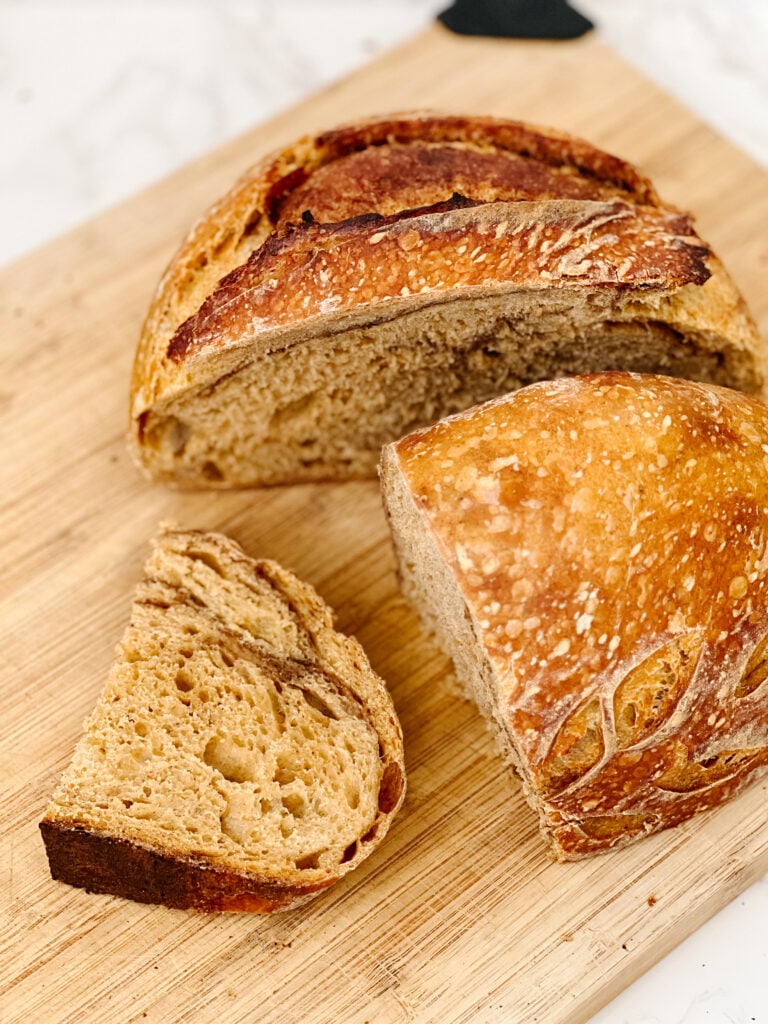
If you’re looking for a fall spin on your usual sourdough loaf, this maple cinnamon pumpkin sourdough bread is it! Real pumpkin goes right into the dough along with pure maple syrup, pumpkin pie spice, and cinnamon. Then there’s a cinnamon sugar swirl tucked inside.
The pumpkin gives the bread a beautiful golden color and a softer crumb, but this is still very much a sourdough loaf, not pumpkin bread disguised as sourdough. It’s lightly sweet with plenty of warm fall flavor, and the cinnamon swirl is the best part.
I make this loaf with all-purpose flour and an active sourdough starter, then let it cold proof overnight. Bake it the next morning and your house will smell AMAZING!
Why You’ll Love This Pumpkin Sourdough Bread
This is one of my favorite ways to change up a basic sourdough loaf for fall without making things overly complicated.
Real pumpkin. There are 180 grams of pumpkin purée mixed right into the dough. Besides adding flavor and that beautiful fall color, pumpkin adds moisture and helps create a soft crumb.
Naturally leavened. This recipe uses active sourdough starter rather than commercial yeast.
Sweetened with pure maple syrup. There’s just enough maple syrup in the dough to add a little sweetness without turning it into a dessert bread.
The cinnamon swirl. Cinnamon and sugar are layered into the dough during shaping, so you’ll get ribbons of cinnamon throughout the finished loaf.
Easy overnight cold proof. Do the majority of the work one day, put your loaf in the refrigerator overnight, and bake it the next morning.
A Few Ingredient Notes
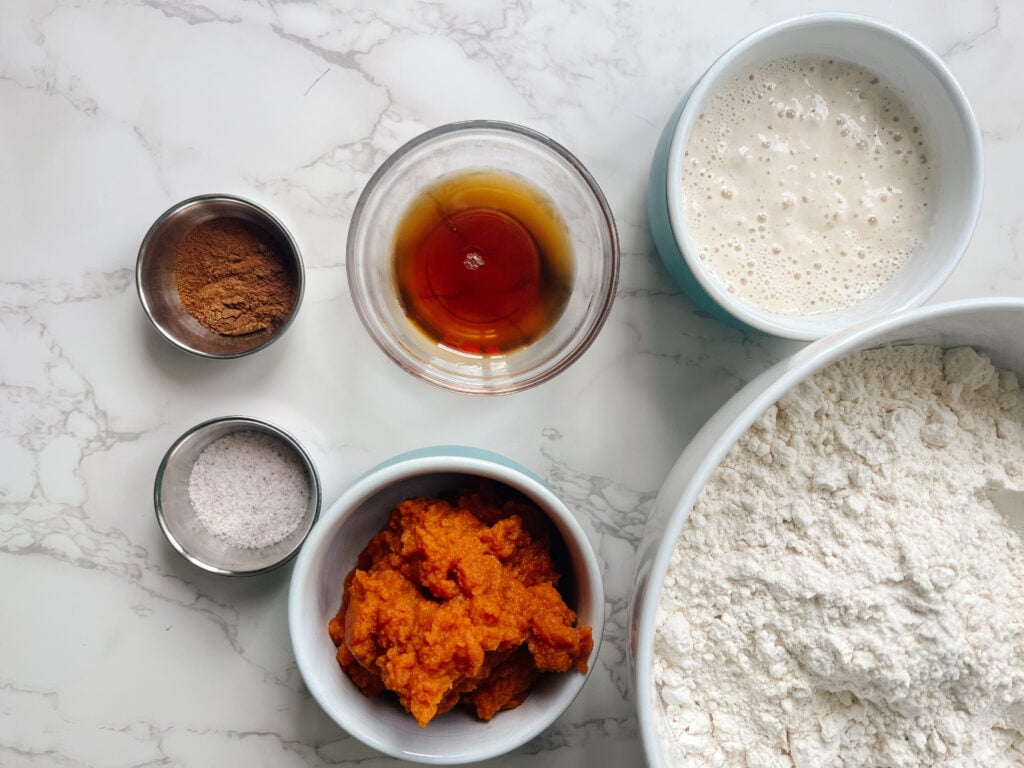
Use 100% pumpkin purée, not pumpkin pie filling. Pumpkin pie filling has added sugar and spices and will change both the sweetness and moisture level of the dough.
I’ve found 180 grams to be a good amount for this loaf. You get actual pumpkin flavor and color without adding so much that the dough becomes overly wet and difficult to handle.
Active Sourdough Starter
Use an active, bubbly starter that’s at or near its peak rather than sourdough discard.
Pumpkin changes the moisture and texture of the dough compared with a basic flour-water-salt sourdough loaf, so starting with a strong starter will give you the best chance at a good rise.
Pure Maple Syrup
I use pure maple syrup in the dough rather than granulated sugar. It works so well with pumpkin and gives the loaf a subtle maple flavor without making it overly sweet.
All-Purpose Flour
You don’t need bread flour for this recipe! I make it with Kirkland Signature Organic Unbleached All-Purpose Flour.
If you switch flour brands, keep in mind that different flours absorb water differently. Your dough may feel slightly wetter or drier than mine.
Cinnamon Sugar Swirl
For the swirl, you can use brown sugar, coconut sugar, or maple sugar. Coconut sugar is my favorite to use and gives the whole loaf a warm toasty brown color.
I also add a teaspoon of flour to the cinnamon mixture. It helps absorb some of the moisture and keeps the cinnamon layer from becoming quite as syrupy inside the loaf.
Like pumpkin recipes? Try these Sourdough Pumpkin Bars!
Tips for the Best Pumpkin Sourdough Loaf
Watch Your Dough, Not Just the Clock
This is probably the most important tip.
After your stretch and folds, bulk fermentation may take another 3–6 hours, but that’s only a guideline. The temperature of your kitchen and the strength of your starter can make a huge difference.
Instead of deciding your dough is ready because a certain number of hours have passed, look at it.
At the end of bulk fermentation, I look for:
- Around a 50% increase in volume
- A puffy, aerated appearance
- Visible bubbles
- A little jiggle when the bowl is moved (it’s ok if the dough is a bit stiff)
If your kitchen is cool, don’t be surprised if it needs more time.
Don’t Overfill the Cinnamon Swirl
More cinnamon sugar sounds like it would automatically make this loaf better, but too much filling can make shaping difficult and can create separation between the layers of dough.
The amount in the recipe gives you plenty of cinnamon flavor without overwhelming the loaf.
I like to add the filling in two stages while shaping rather than putting all of it in one thick layer. This distributes the cinnamon throughout the loaf and gives you more of that swirl when you slice it.
Don’t Take the Cinnamon All the Way to the Edges
Leave a little space around the edges when adding your cinnamon mixture. This makes the loaf easier to seal and helps keep the filling inside during baking.
Don’t worry if a little cinnamon sugar escapes and caramelizes around the crust, though. Those crispy cinnamon edges might be one of the best parts.
Bake It Straight From the Refrigerator
There’s no need to bring the loaf back to room temperature after the overnight cold proof.
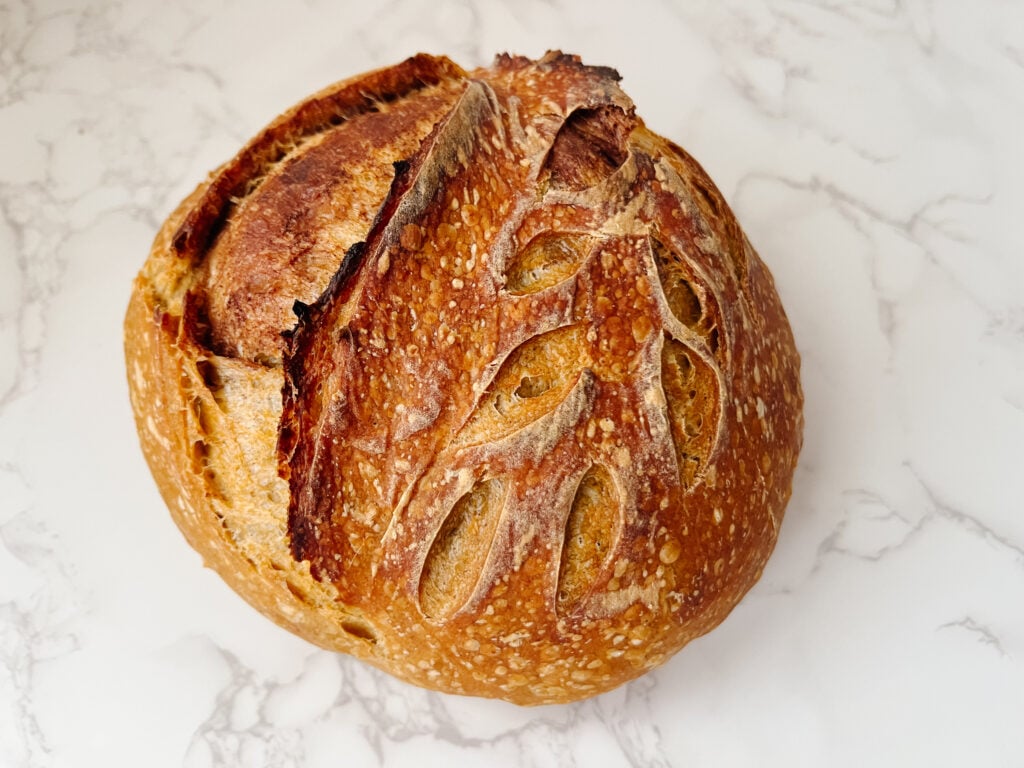
Turn the cold dough out of the banneton, score it, and put it directly into your preheated Dutch oven.
Cold dough is also much easier to score.
Want even more pumpkin? These Sourdough Pumpkin Chocolate Chip Muffins are amazing!
An Easy Pumpkin Sourdough Baking Schedule
Sourdough doesn’t always cooperate with a strict schedule, but here’s an example of how I fit this loaf into my day:
8:00 AM: Feed sourdough starter
12:00 PM: Mix dough
12:30 PM: First stretch and fold
1:00 PM: Second stretch and fold
1:30 PM: Third stretch and fold
2:00 PM: Fourth stretch and fold
2:00–6:00 PM: Continue bulk fermentation as needed
Around 6:00 PM: Add cinnamon swirl and shape
6:15 PM: Refrigerate overnight
Next morning: Score and bake
Use this as a general guide rather than a rule. You can also feed your starter the night before and mix the dough in the morning.
How to Serve Maple Cinnamon Pumpkin Sourdough
This loaf is really good just sliced and eaten on its own, especially while it’s fresh.
Toasted with salted butter? YES.
You could also serve it with cream cheese, drizzle a warm slice with a little maple syrup, or use it alongside eggs for a fall breakfast.
And if you have some left after a couple of days, make French toast with it. Pumpkin + maple + cinnamon already did most of the work for you!
My favorite sea salt is Redmond salt. Perfect for everyday use and in baking! Use code Laura15 for a discount.
Pumpkin Sourdough Bread FAQs
Can I use homemade pumpkin purée?
Yes, but pay attention to the consistency. Homemade pumpkin purée can contain more water than canned pumpkin.
If yours looks particularly watery, strain off some of the excess moisture before weighing it for the recipe. Too much additional water can make your sourdough difficult to shape.
Can I use bread flour instead of all-purpose flour?
Yes, although it may change the texture and hydration slightly.
This recipe was developed with Kirkland Signature Organic Unbleached All-Purpose Flour, so that’s what I recommend if you want your dough to behave most like mine. (Side note: this flour, in the green and white bag at Costco, is white labeled. The brand is Central Milling and it’s a great company!)
Can I make pumpkin sourdough bread with sourdough discard?
Not with this recipe as written.
The sourdough starter is responsible for leavening the bread, so you want an active starter that’s capable of giving the dough a good rise. Sourdough discard would require adjusting the recipe and adding another leavening method.
Why is my pumpkin sourdough taking so long to rise?
First, check the temperature of your kitchen. Sourdough fermentation slows considerably in a cooler environment.
Your starter also makes a difference. A very active starter will generally ferment dough faster than one that was used before or after its peak.
Give the dough time and look for the signs of fermentation rather than ending bulk fermentation just because the suggested time has passed. This is a good tip for sourdough bakes in general!
Why did my cinnamon swirl separate from the bread?
A little separation around a cinnamon swirl isn’t unusual. Sugar attracts moisture and melts as the loaf bakes.
Avoid using more cinnamon sugar than the recipe calls for, leave some room around the edges when adding the filling, and create good tension when you shape the loaf. I cannot stress good tension enough! It is very important.
How to Store Pumpkin Sourdough Bread
Let the loaf cool completely before slicing or storing it. Cutting sourdough while it’s still hot can leave the crumb gummy.
For longer storage, I prefer freezing sourdough rather than refrigerating it. Slice the completely cooled loaf and freeze the individual slices in a freezer-safe bag or container. Then you can pull out a slice whenever you want one and toast it straight from frozen.
Maple Cinnamon Pumpkin Sourdough Loaf Recipe
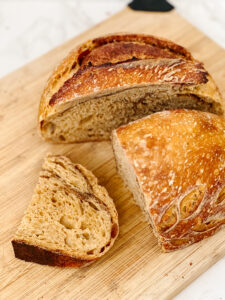
A naturally leavened pumpkin sourdough bread made with real pumpkin, pure maple syrup and warm fall spices, with a cinnamon sugar swirl tucked throughout the loaf.
Ingredients
Dough
- 100 g active sourdough starter about 1/2 cup
- 180 g pumpkin purée 3/4 cup
- 230 g lukewarm water 1 cup minus 1 tbsp
- 35 g maple syrup 1 tbsp + 2 tsp
- 500 g organic all purpose flour 4 cups + 2 tbsp
- 12 g sea salt 1 tsp
- 2 g pumpkin pie spice 1 tsp
- 1.5 g ground cinnamon 1/2 tsp
Cinnamon Swirl
- 35 g coconut sugar 3 tbsp (or brown sugar, white sugar, or maple sugar)
- 5 g ground cinnamon 2 tsp
- 3 g organic all purpose flour 1 tsp
- pinch salt
Instructions
- Mix the dough: Mix the starter, pumpkin purée, water, and maple syrup. Add the flour, salt, pumpkin pie spice, and cinnamon. Mix until no dry flour remains. Cover and rest for 30 minutes.
- Stretch + folds: Complete 3-4 sets of stretch-and-folds, about 30 minutes apart. (1 1/2-2 hours total here)
- Bulk ferment: Let the dough continue fermenting until it looks somewhat puffy, has some bubbles, and has risen about 50%. This will typically take another 3–6 hours, depending on the temperature of your kitchen.
- Make the cinnamon swirl: Combine the sugar, cinnamon, flour, and pinch of salt.
- Shape and add the swirl: Gently stretch the dough into a rectangle.Sprinkle half of the cinnamon mixture evenly over the dough. Fold the sides inward, then sprinkle on the remaining cinnamon mixture.Roll and shape into a loaf.
- Cold proof: Place seam-side up in a banneton or oiled bowl. Cover and refrigerate 8–14 hours.
- Bake the bread: Preheat your Dutch oven at 450°F for at least 30 minutes.Turn out and score the cold loaf.Bake covered at 450°F for 27 minutes.Remove the lid and reduce the temperature to 425°F. Bake another 18–22 minutes uncovered, until deeply golden. The internal temperature should reach about 200°Cool completely before slicing.



Leave a Reply

Hi! I'm Laura!
I’m on a mission to normalize nutrient dense food. By nutrient dense I mean foods that pack a punch because the amount or type of nutrient they offer is so incredible. So much of your health is in your own hands. That should feel empowering!!I wholeheartedly believe that when your gut health is in order, the rest of your life will take a healthy turn, too! I promise that whenever you decide to try one of my recipes, you can trust that you are providing your family a healthy, nourishing, and incredibly tasty experience!
Sign Up For Tips & Tricks
Latest Recipes
September 26, 2026
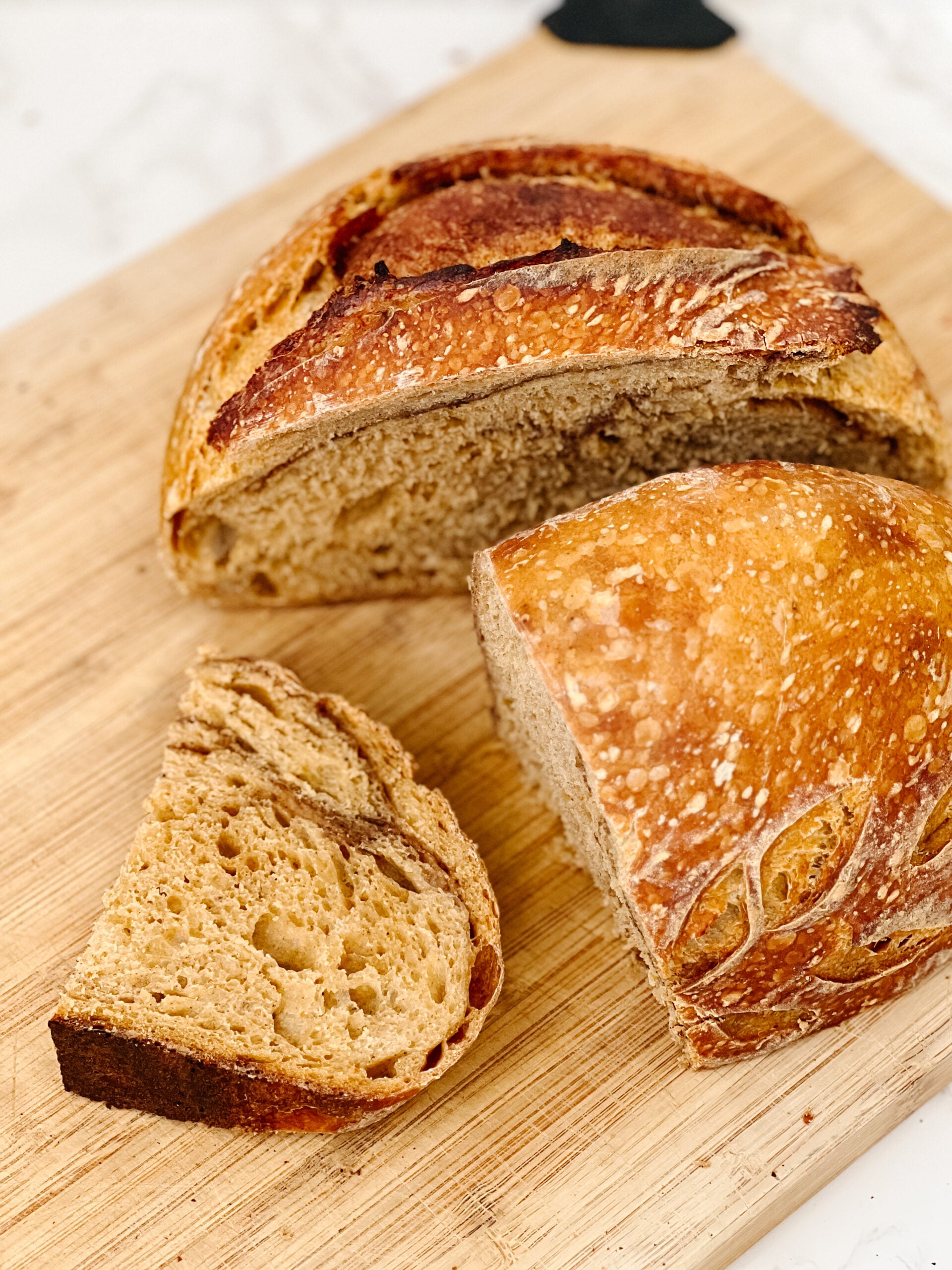
Pumpkin Sourdough Bread with Cinnamon Swirl
February 22, 2026
Sourdough Lemon Blueberry Scones

October 2, 2025
How to Make Fermented Pears with Apple, Ginger, and Spices (Probiotic Fruit Recipe)
April 3, 2025
Easy Sourdough Bread for Beginners
February 25, 2025
Sourdough Bagels
See All
I made your pumpkin cinnamon sourdough bread for a conference weekend and it was a hit! Thank you. So many of my favorites are your recipes ❤️
I made this tonight and it was amazing!
I also put raw pumpkin seeds on top of the loaf.
This is a keeper recipe and we will for sure make again.
thank you!